Email Us
nicoledai@sundi-wpc.com
Call us
+86-13357804798

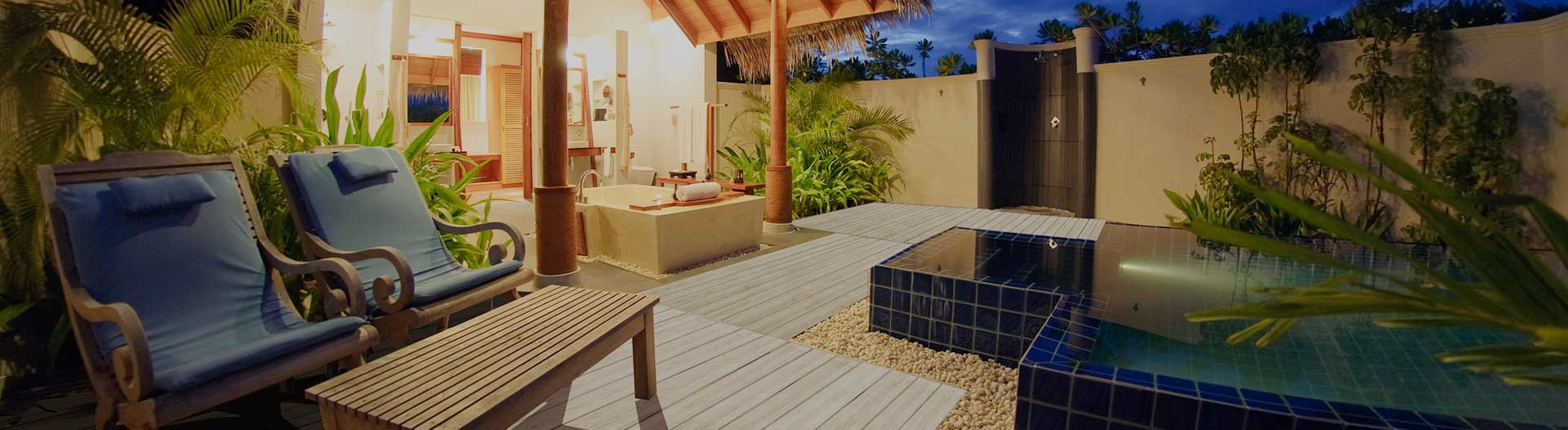
If you are planning an outdoor project in a region with intense sunlight—such as Australia, the Middle East, or the Southern United States—the 'Standard vs. Co-extrusion' debate is the most critical decision you'll make.
While both materials are marketed as 'low maintenance,' their reaction to high UV exposure is worlds apart. Here is the definitive guide to choosing the right board for high-sun environments.
Standard WPC is a 'mono-layered' product. The wood fibers and plastic polymers are mixed together and extruded into a single profile.
The UV Vulnerability: Because wood fibers are exposed on the very surface of the board, UV rays break down the lignin in the wood and the polymer bonds.
Result: You will typically see 50-70% fading within the first 6 months. Over time, the surface can become chalky or "fuzzy" as fibers degrade.
Also known as 'Capped' or 'Shielded' WPC, this material features a high-performance outer shell that is extruded simultaneously with the core.
The UV Shield: The outer layer is made of an advanced engineering plastic with high concentrations of UV inhibitors. It contains zero wood fibers on the surface.
Result: It maintains 95%+ of its original color for decades. It doesn't just resist fading; it prevents the core from becoming brittle.
But remember, surviving the sun involves more than just keeping its color; the entire profile must also endure the heat without bending. To ensure your project remains structurally sound, click to learn how to choose WPC fencing for extreme weather from scorching summers to freezing winters.
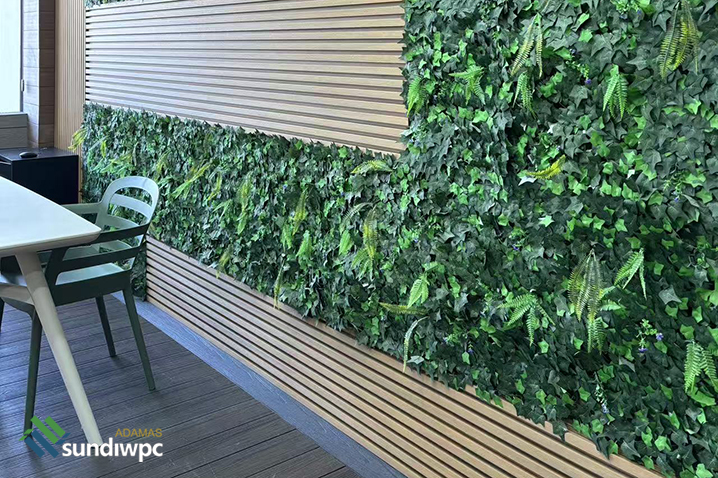
In laboratory Xenon Arc testing (simulating years of intense sunlight), the differences become measurable:
Feature | Standard WPC | Co-extrusion (Capped) WPC |
Fading Resistance | Moderate to Low (Fades to grey) | Superior (Color-lock technology) |
Stain Resistance | Low (Porous surface) | High (Non-porous shell) |
Scratch Resistance | Moderate | High (Hardened outer layer) |
Lifespan in Desert Heat | 5–8 Years | 20–25+ Years |
Surface Texture | Sanded / Brushed | Deep 3D Wood Grain |
UV exposure isn't just about color; it's about heat. Dark-colored Standard WPC boards can reach surface temperatures of over 70°C (158°F) in direct sun.
Standard WPC tends to expand more significantly when heated, which can lead to warping or 'crowning' if the installation gaps aren't perfect. Co-extrusion boards, while still subject to thermal expansion, are generally more structurally stable because the 'cap' helps regulate the temperature of the internal core.
The project is in a fully shaded area.
You are on a very tight budget for a short-term (under 5 years) rental property.
You actually prefer the 'weathered wood' look that comes with fading.
The area receives more than 4 hours of direct afternoon sun.
You want a 'set it and forget it' solution with a 20-year warranty.
You are choosing a dark color (Charcoal, Walnut) and want it to stay dark.
 English