Email Us
nicoledai@sundi-wpc.com
Call us
+86-13357804798

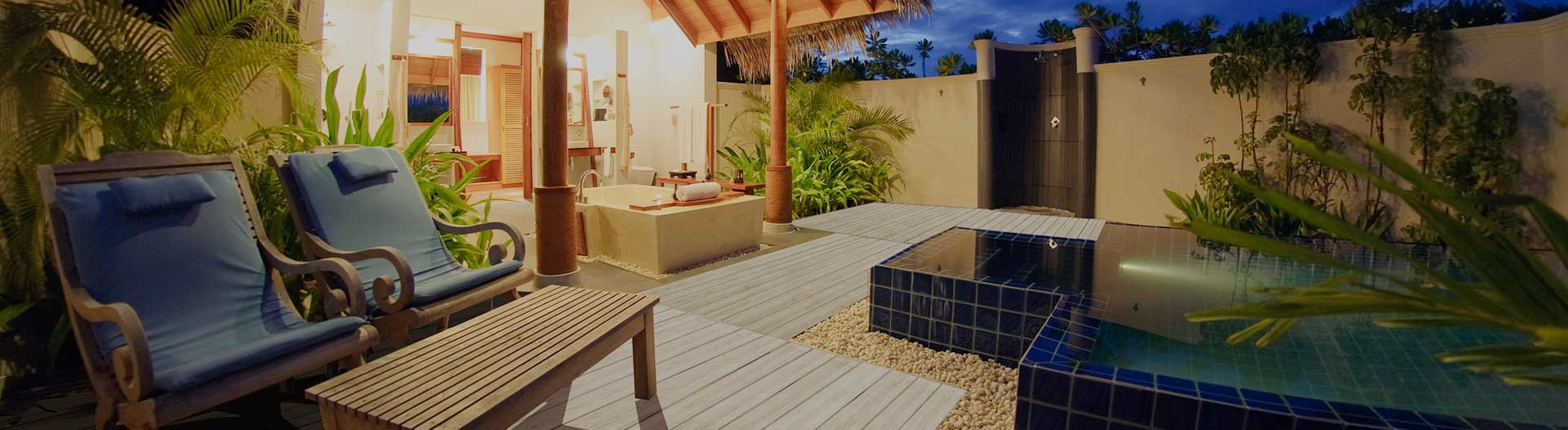
When planning a high-end residential development or upgrading a commercial outdoor space, budgeting for landscaping structures requires a careful balance between upfront costs and long-term value. One of the most frequent questions we encounter from property developers and landscape architects is:
Given that Wood-Plastic Composite (WPC) premiums can be higher initial outlays compared to standard pressure-treated wood, it’s a valid question. Here is a commercial-grade cost-benefit analysis to help you evaluate the true return on investment (ROI) of WPC pergolas.
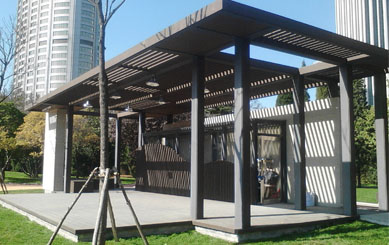
Many project managers opt for traditional timber because the initial material invoice is lower. However, a wood pergola behaves like a depreciating asset from day one. In commercial settings or luxury residential complexes, timber requires constant oversight. Within 24 months, weather exposure triggers warping, checking (splitting), and color degradation.
The real financial strength of a WPC pergola lies in the complete elimination of maintenance budgets.
Labor and Material Savings: Traditional wood structures must be sanded, stained, or resealed every 12 to 24 months. For a large commercial pavilion or multiple residential units, the recurring cost of specialized sealants and contractor labor accumulates rapidly.
Unlike timber, which requires on-site cutting, treating, and painting, pre-engineered composite components arrive ready for assembly. Developers can review our WPC pergola step-by-step guide to see how our interlocking tracking system minimizes contractor hours and eliminates costly installation errors.
Zero Downtime: For commercial properties—such as hotels, golf courses, or restaurant patios—maintenance means closing off outdoor seating areas. A WPC pergola requires only a quick wash with water, meaning zero operational disruption and no lost revenue.
WPC is engineered to combat the primary killers of outdoor architecture: moisture and UV radiation.
Rot and Termite Immunity: Because the wood fibers are encapsulated in high-density polymers, moisture cannot penetrate the core. This guarantees that the structure will never rot or become compromised by termites.
Color Stability: Advanced co-extrusion WPC profiles feature an outer protective shield that slows down UV degradation, ensuring the property maintains its premium curb appeal for decades without fading into a weathered gray.
If your project demands a short-term, temporary fixture that will be replaced or sold within 2 years, cheap timber might suffice. However, if you are building for long-term asset valuation, low maintenance overhead, and sustainable modern aesthetics, a WPC pergola yields a full return on investment by year 4. It transforms a recurring maintenance headache into a permanent, hassle-free architectural feature.
 English