Email Us
nicoledai@sundi-wpc.com
Call us
+86-13357804798

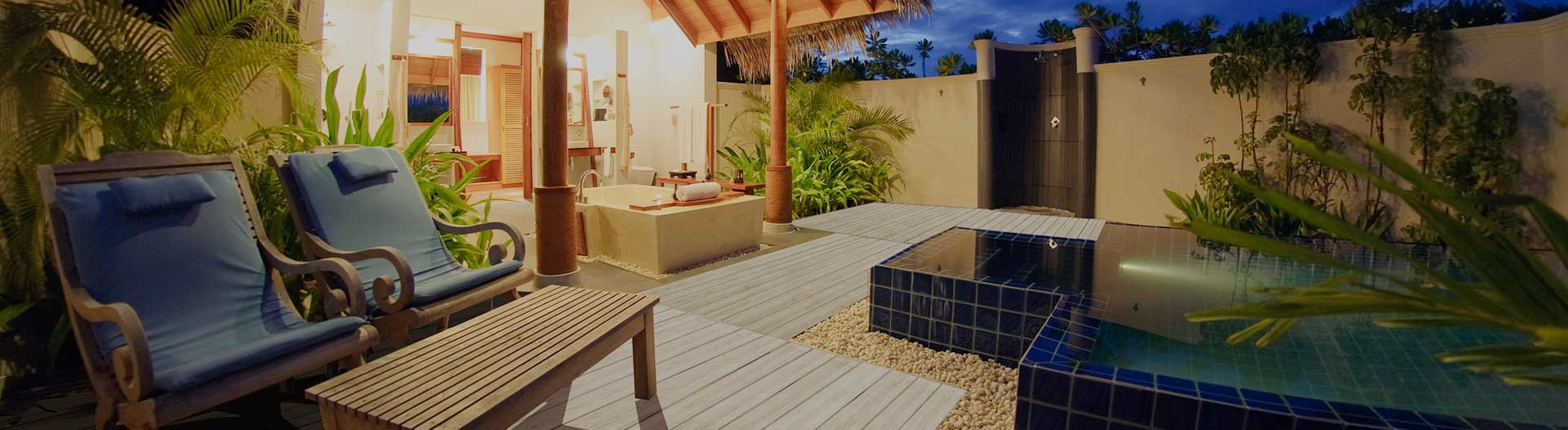
When designing commercial riverways, public parks, or high-end residential balconies, developers and homeowners alike often narrow down their railing choices to two main contenders: Wood-Plastic Composite (WPC) and Metal (Steel/Aluminum).
While both materials offer solid structural protection, they serve entirely different functional and aesthetic purposes. Let's break down how they compare in durability, touch comfort, and overall design.
“A metal railing can be icy cold in winter and scorching hot in the summer sun, whereas WPC preserves the warm, thermal-regulating feel of natural timber year-round.”
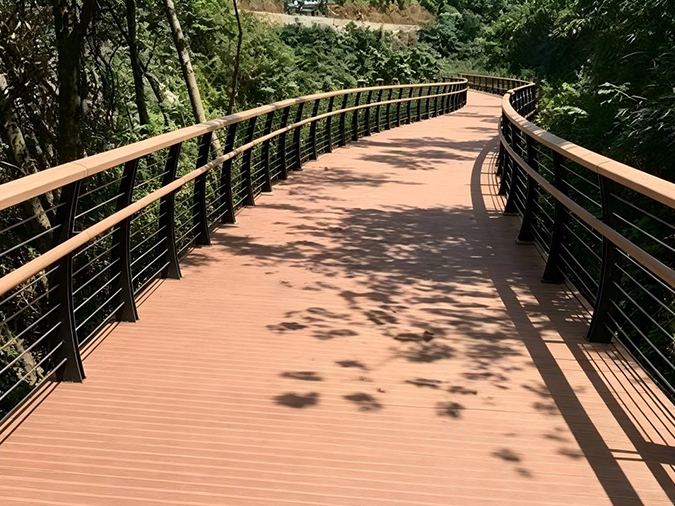
In public parks, lakeside trails, or private balconies, people naturally rest their hands on railings.
Metal Railings: Metal is highly conductive. In summer heat, steel or iron railings can become dangerously hot to the touch, while in freezing winters, they feel uncomfortably cold.
WPC Railings: Because WPC is composite-based, it retains the natural insulating properties of wood. It stays comfortably warm in winter and cool in summer, offering a far superior tactile experience for visitors.
Moisture is the ultimate enemy of outdoor metal structures.
Metal Railings: Unless you invest in premium-grade marine aluminum, iron or low-grade steel railings will inevitably rust and corrode when exposed to rain, snow, or coastal sea breezes. They require continuous rust-treatment and painting.
WPC Railings: WPC does not rust, corrode, or degrade under humid conditions. This makes systems like Sundi WPC balcony railings highly recommended for seaside resorts, damp riverbanks, and rainy climates.
For balcony projects, see our WPC balcony railing installation guide for installation and safety considerations.
Metal: Tends to look sleek, industrial, and sometimes sterile.
WPC: Delivers a warm, natural wood-grain finish that blends beautifully with natural landscapes, garden designs, and eco-friendly architectural styles.
Choose WPC Railing if you prioritize a natural timber look, zero maintenance, touch comfort, rust prevention in humid climates, and long-term cost-efficiency.
Choose Metal Railing if your project requires an ultra-slim, ultra-modern industrial silhouette or highly specific decorative wrought-iron shapes.
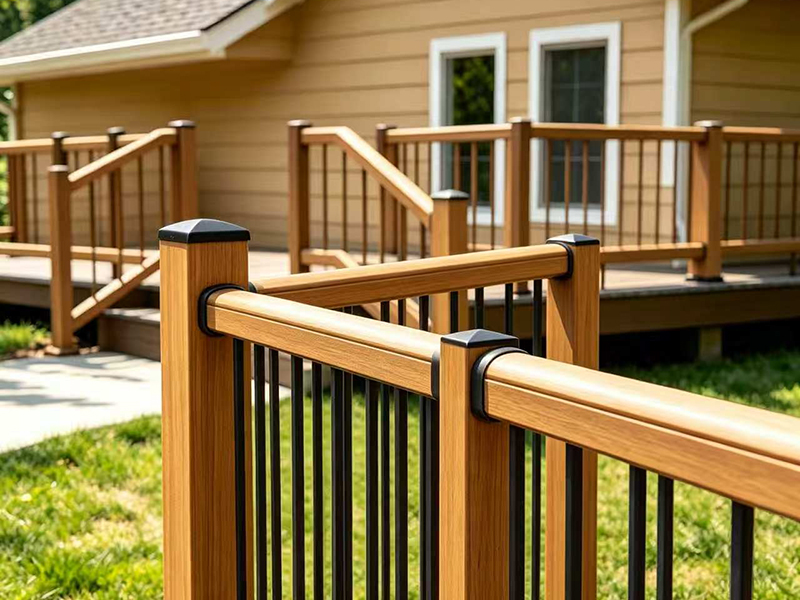
If you love both, why not combine a Sundi WPC top handrail with black metal balusters for the ultimate modern-rustic look?
A: Initially, yes. WPC railing has a higher upfront material cost compared to pressure-treated wood and basic steel. However, when you factor in the annual costs of sanding, staining, sealing, or rust-proofing required for wood and metal, WPC becomes the more cost-effective choice within 3 to 5 years, requiring virtually zero maintenance budget. For another material comparison, see our WPC railing vs. wood guide.
A: While natural timber turns gray and cracks under UV exposure, premium WPC railing (especially capped co-extrusion composite) features advanced UV inhibitors. It may undergo a very slight, natural weathering process in the first few months, but it will stabilize and maintain its rich color for decades without ever needing to be painted or stained.
A: No. Metal railings (steel or iron) are highly conductive and can become dangerously hot to the touch in direct sunlight. WPC is composed of a blend of wood fibers and polymers, meaning it retains the low thermal conductivity of wood. It remains at a safe, comfortable touch temperature even during hot summer days.
A: Metal railings are inherently stiffer than pure composites. However, modern WPC railing systems (such as Sundi WPC) are designed with internal hollow channels that accommodate heavy-duty aluminum or galvanized steel reinforcements. This combination offers the warm aesthetics of wood with the structural strength and wind-load resistance of metal.
A: Absolutely. Coastal salt air and high humidity will rapidly rust steel and corrode low-grade metals. WPC is completely immune to rust, rot, decay, and marine borers. This makes it the absolute best choice for seaside decks, lakefront docks, and rainy climates.
 English